A Balinese Hindu blessing on the edge of Balangan cliff: surrounded by their loved ones, J and G received the mantras, the holy water and the sacred thread facing the Indian Ocean, all the way to sunset.
What is a Balinese blessing?
In Bali, no important moment in life goes by without a ceremony. A Balinese blessing draws on the rituals of Balinese Hinduism to ask the gods to protect a couple: offerings, mantras, holy water and prayer. It is led by a pemangku, a temple priest; on this day he officiated together with a priestess.
For couples from abroad it is a symbolic ceremony: it has no legal value, but it is often the most moving moment of the trip. Some choose it for their wedding, others to renew their vows, or simply to mark a journey together.
A real ceremony, not a show
In Bali, many of the “blessings” offered to tourists are little more than staged performances: costumed extras, decorative offerings and gestures improvised for the camera. That is not how we work.
The blessings we organise are genuine Balinese Hindu ceremonies. They are led by real pemangku, priests who officiate at the temples and ceremonies of their own village. The offerings are prepared according to tradition, exactly as for a Balinese ceremony, and the prayers are those recited in the temples. The priest is not playing a part: he truly asks the gods to protect the couple.
That is what makes the moment so powerful for the couple and their loved ones: they are not watching a ceremony, they are taking part in it.
Balangan cliff, facing the ocean
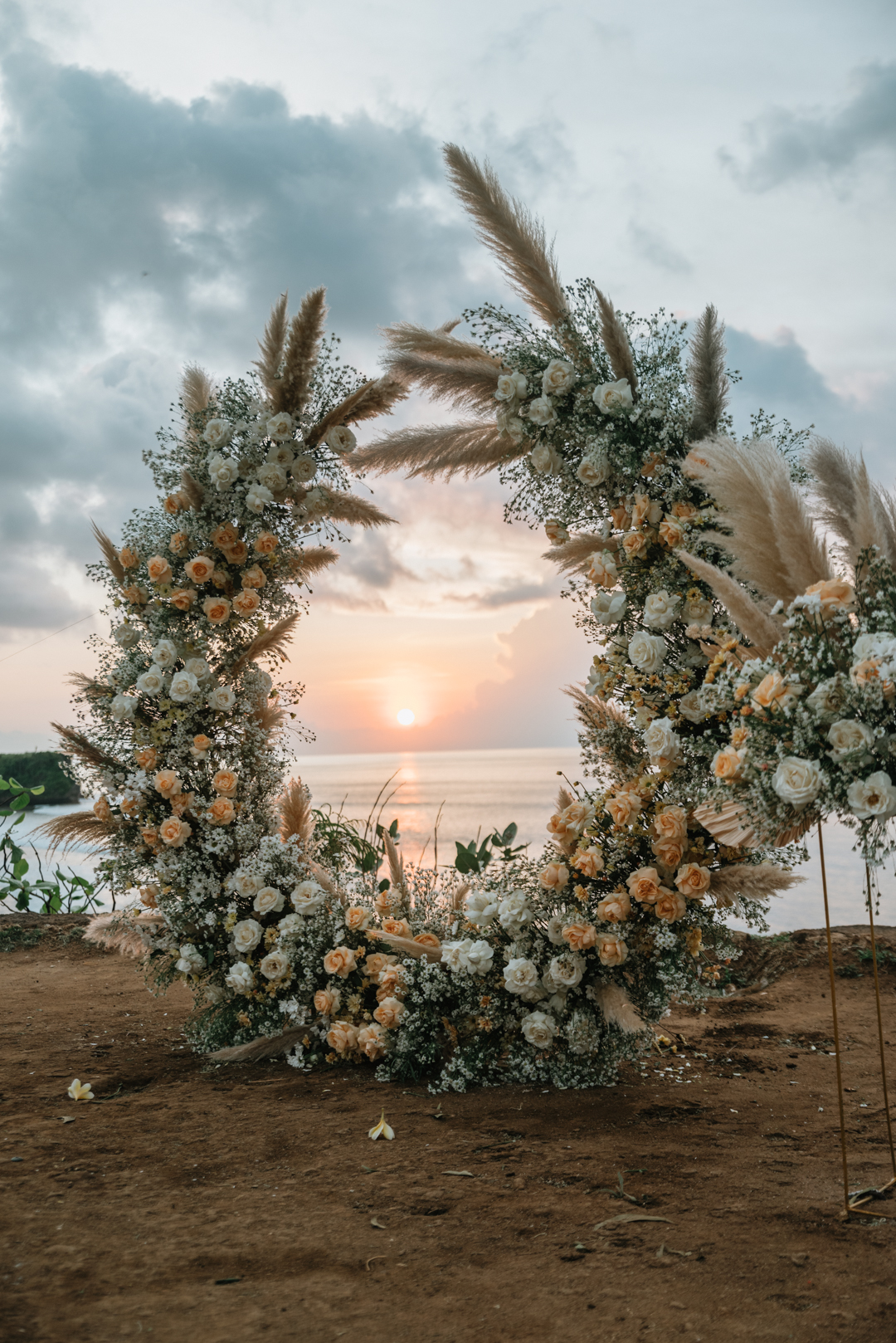
For J and G, we set up the ceremony on a cliff point above Balangan beach, in the south of the Bukit peninsula. White ceremonial umbrellas (tedung), an arch of pampas grass and peach roses, white chairs and a heart of petals in front of the altar: a simple setting that leaves all the room to the sea and the ritual.
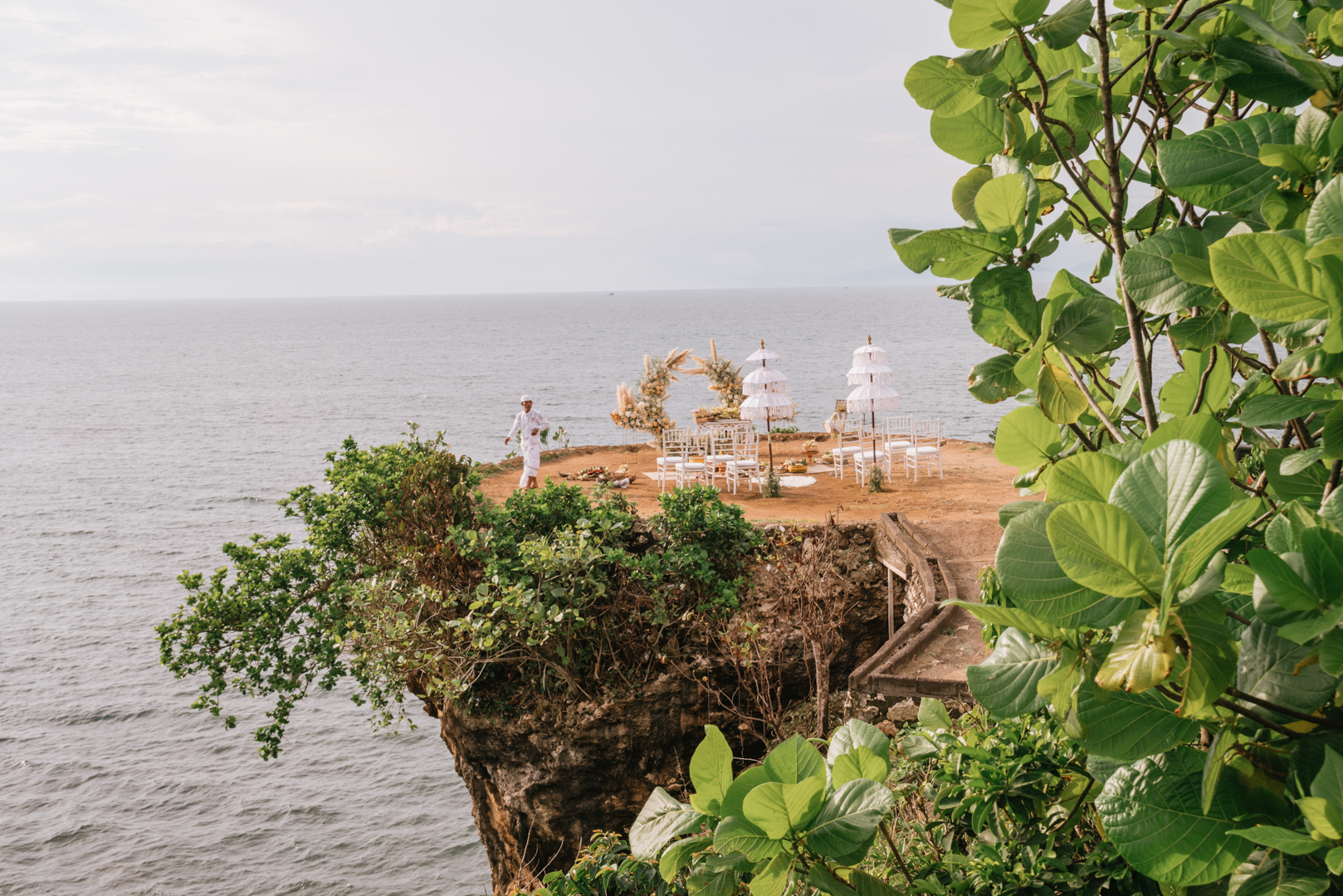
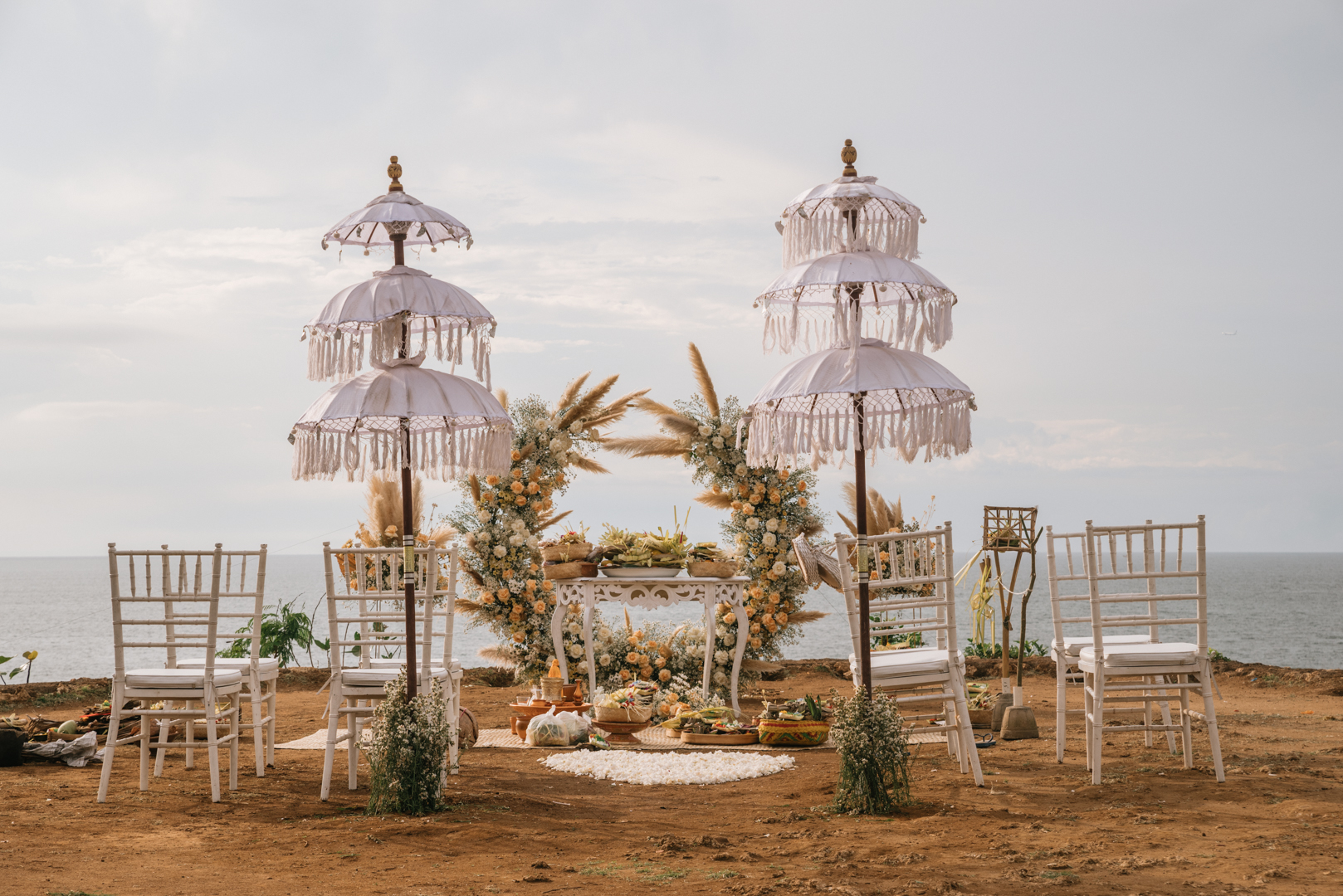
Balangan cliff, the white tedung and the floral arch
Offerings, prepared from the morning
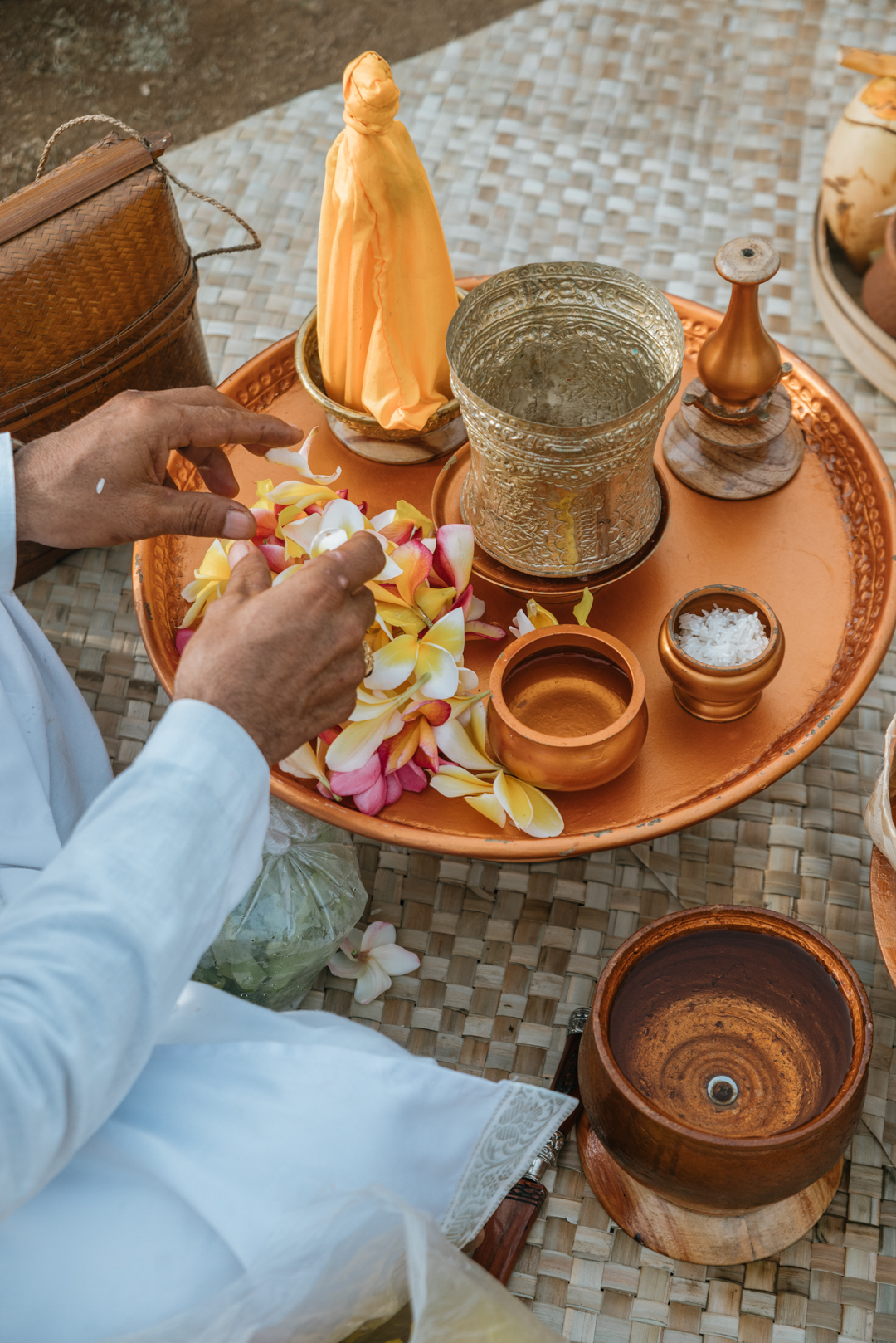
A Balinese blessing starts long before the guests arrive. The priest and priestess lay out the banten, the offerings: baskets of flowers, rice, fruit and woven palm leaves. At the centre sits the pejati, the offering that announces the ceremony to the gods and shows the sincerity of those asking for it.
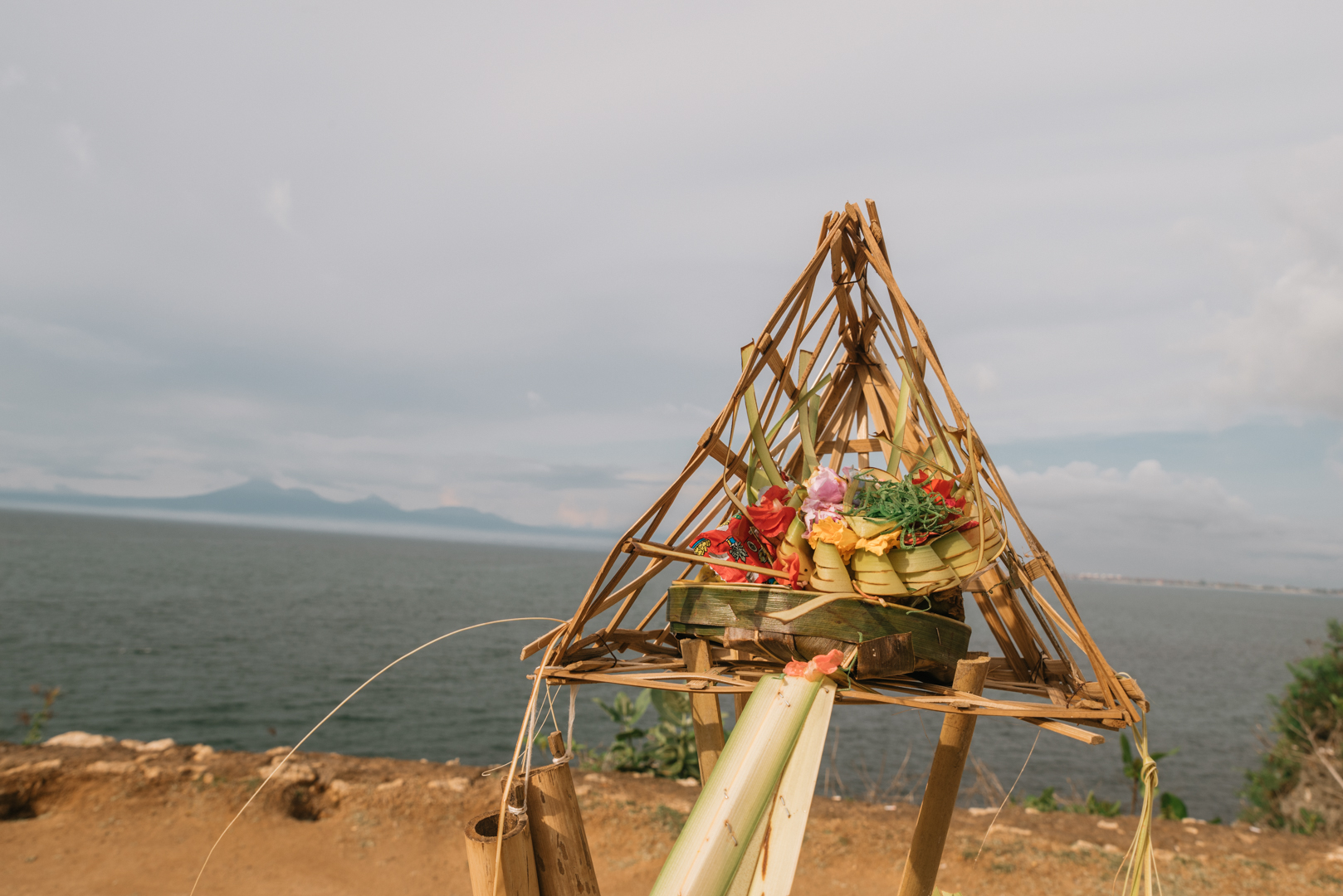
A small bamboo shrine stands on the edge of the cliff, and more offerings are placed directly on the ground: the segehan, meant to appease the spirits of the place. In Bali, the forces above are honoured just as much as those below, and the ceremony seeks to keep that balance.
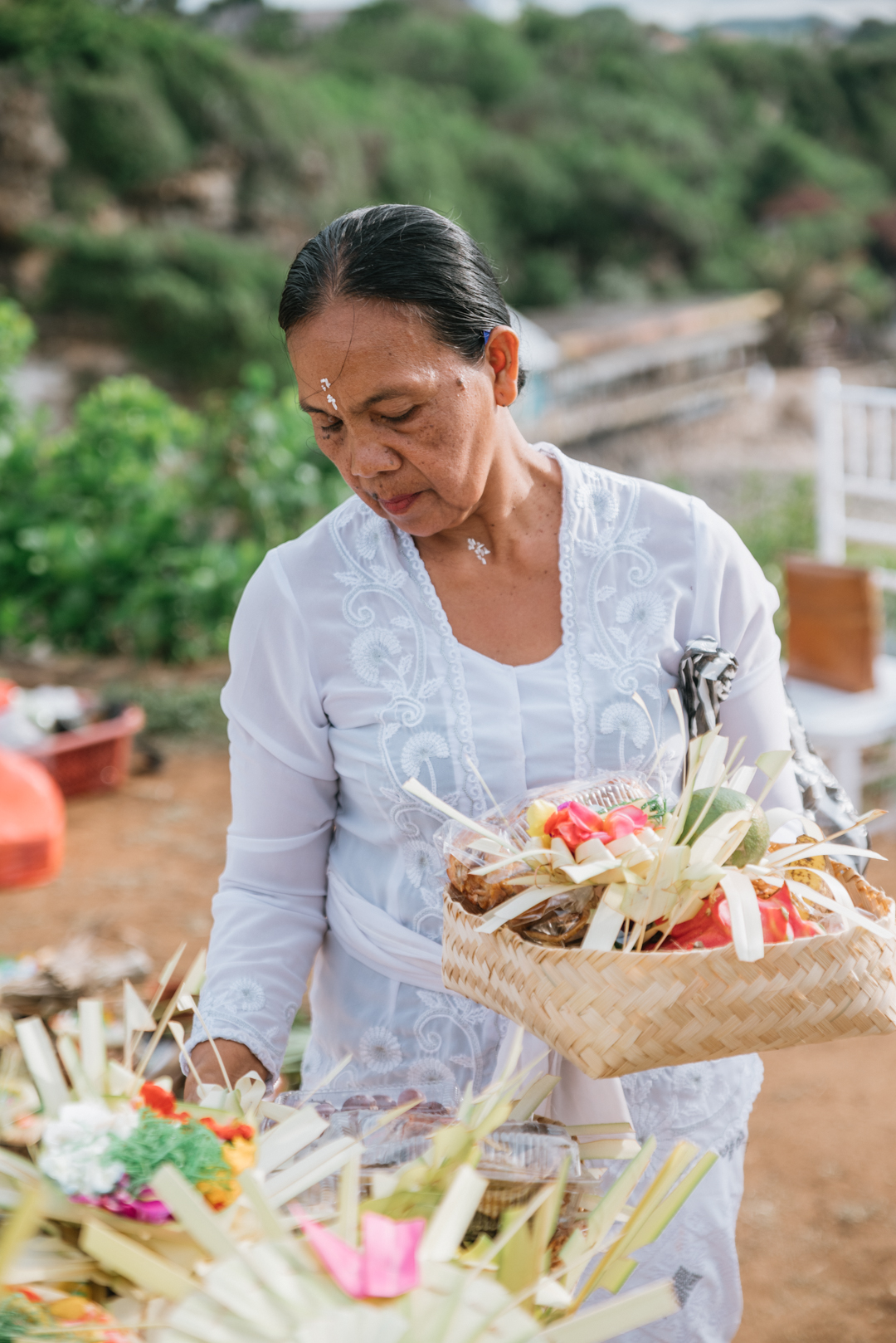
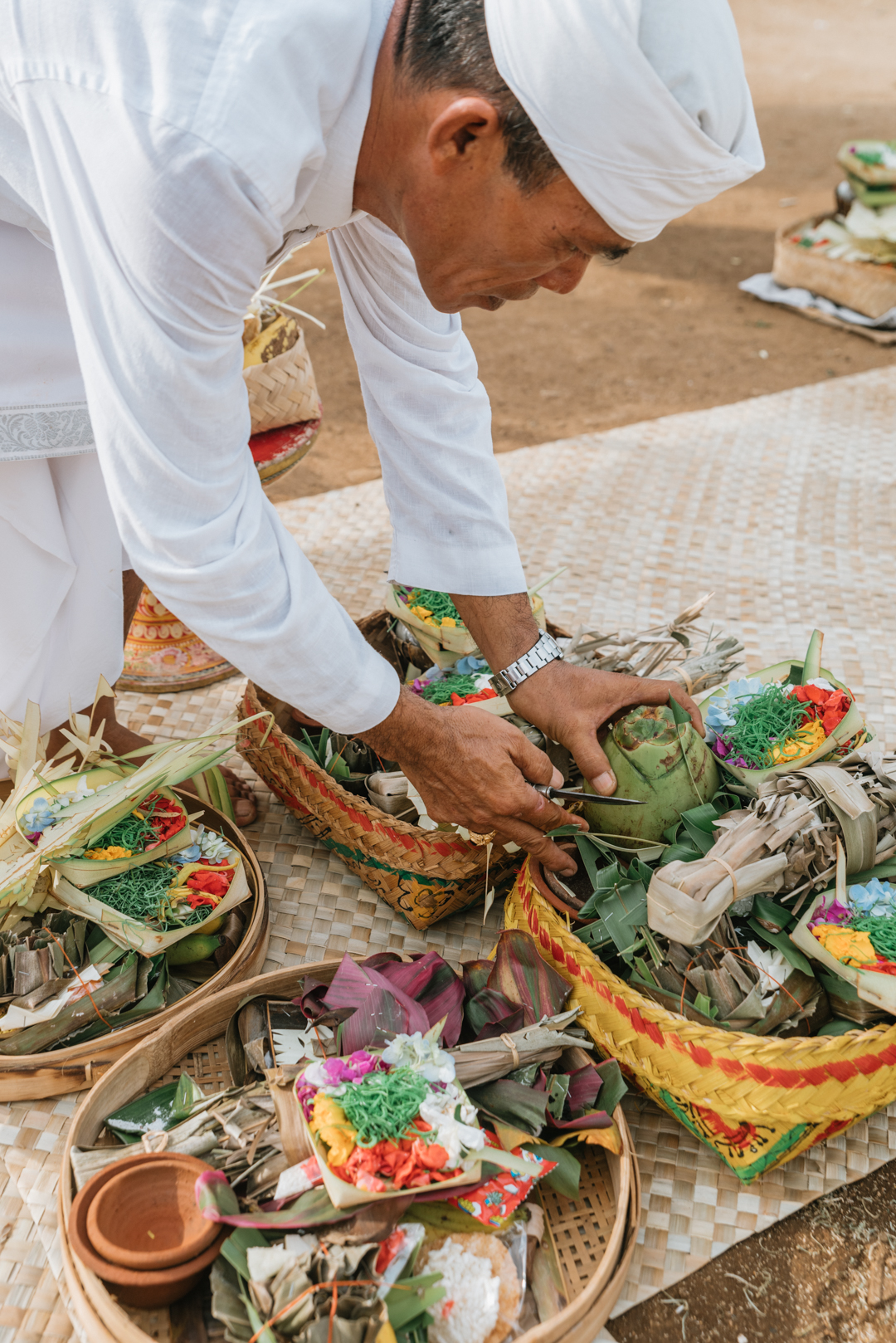
Preparing the banten
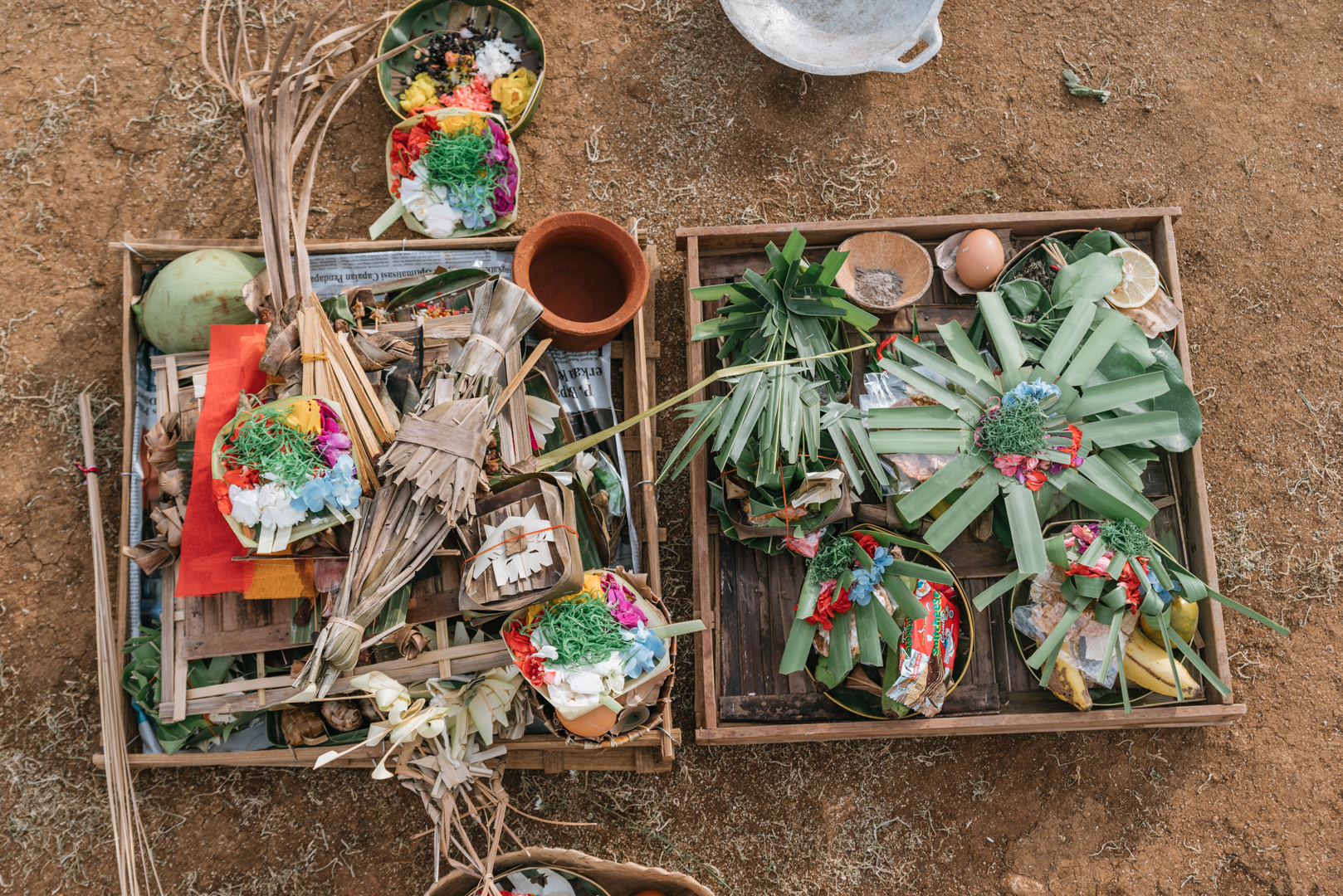
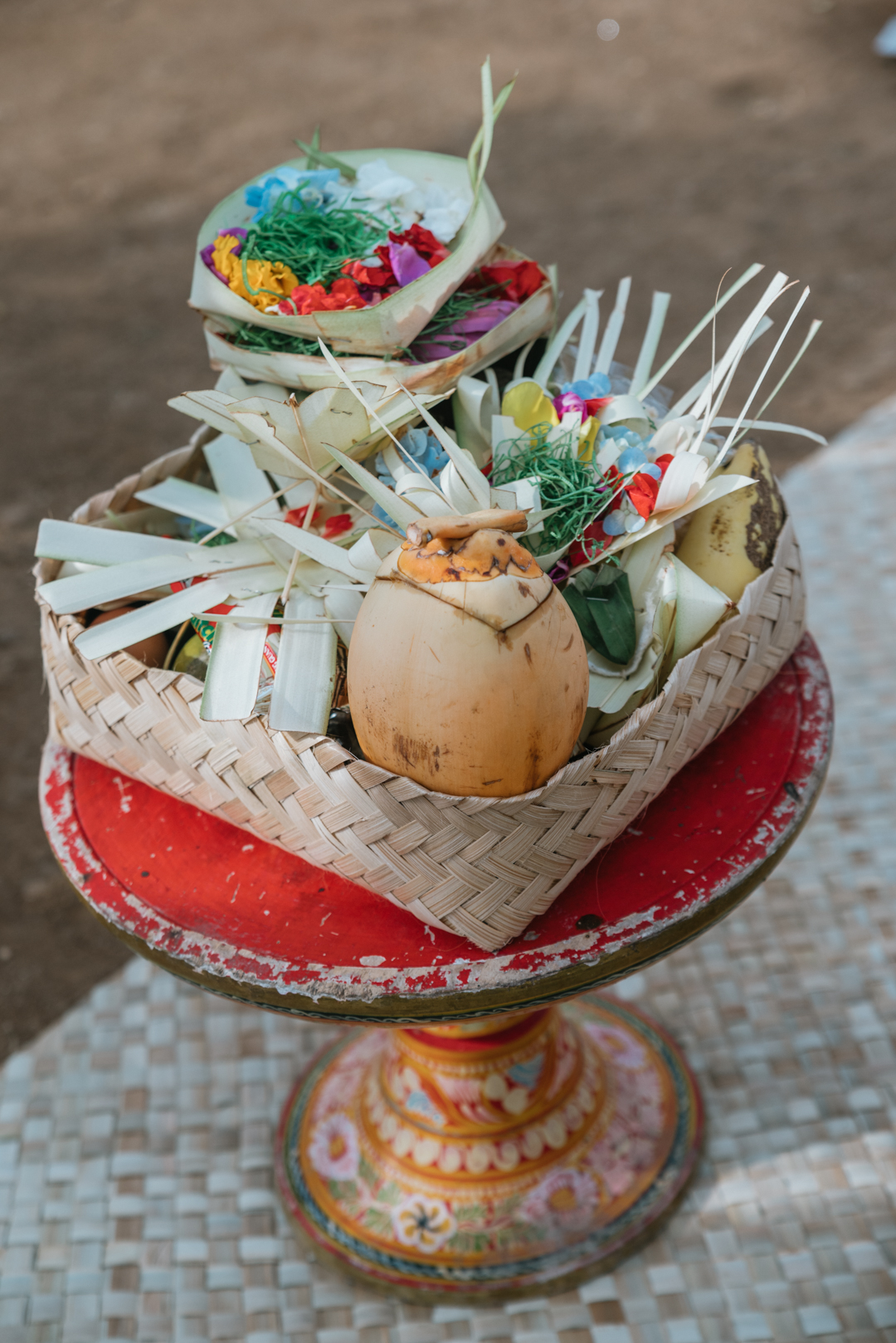
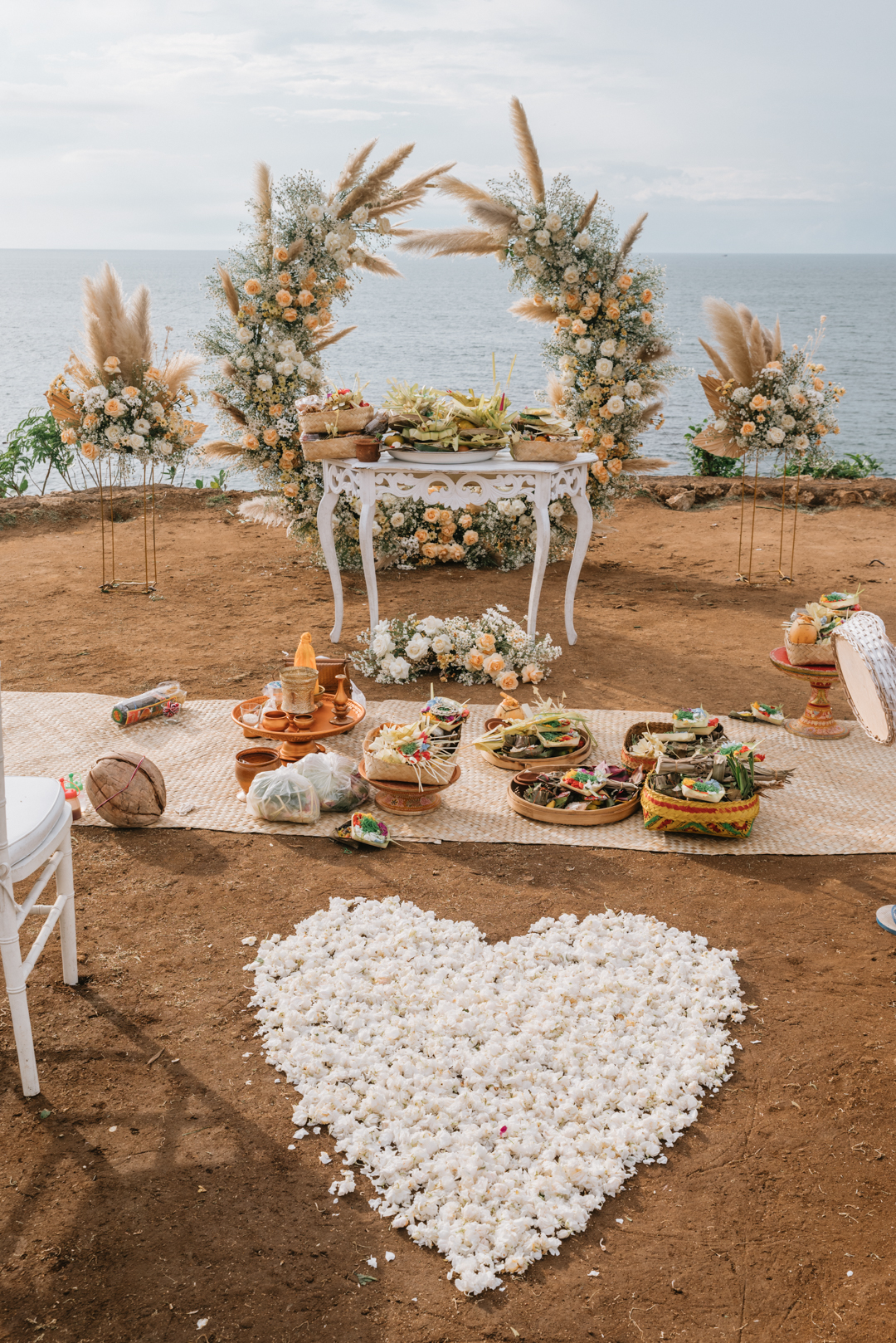
The pejati and the heart of petals before the altar
Mantras, bell and holy water
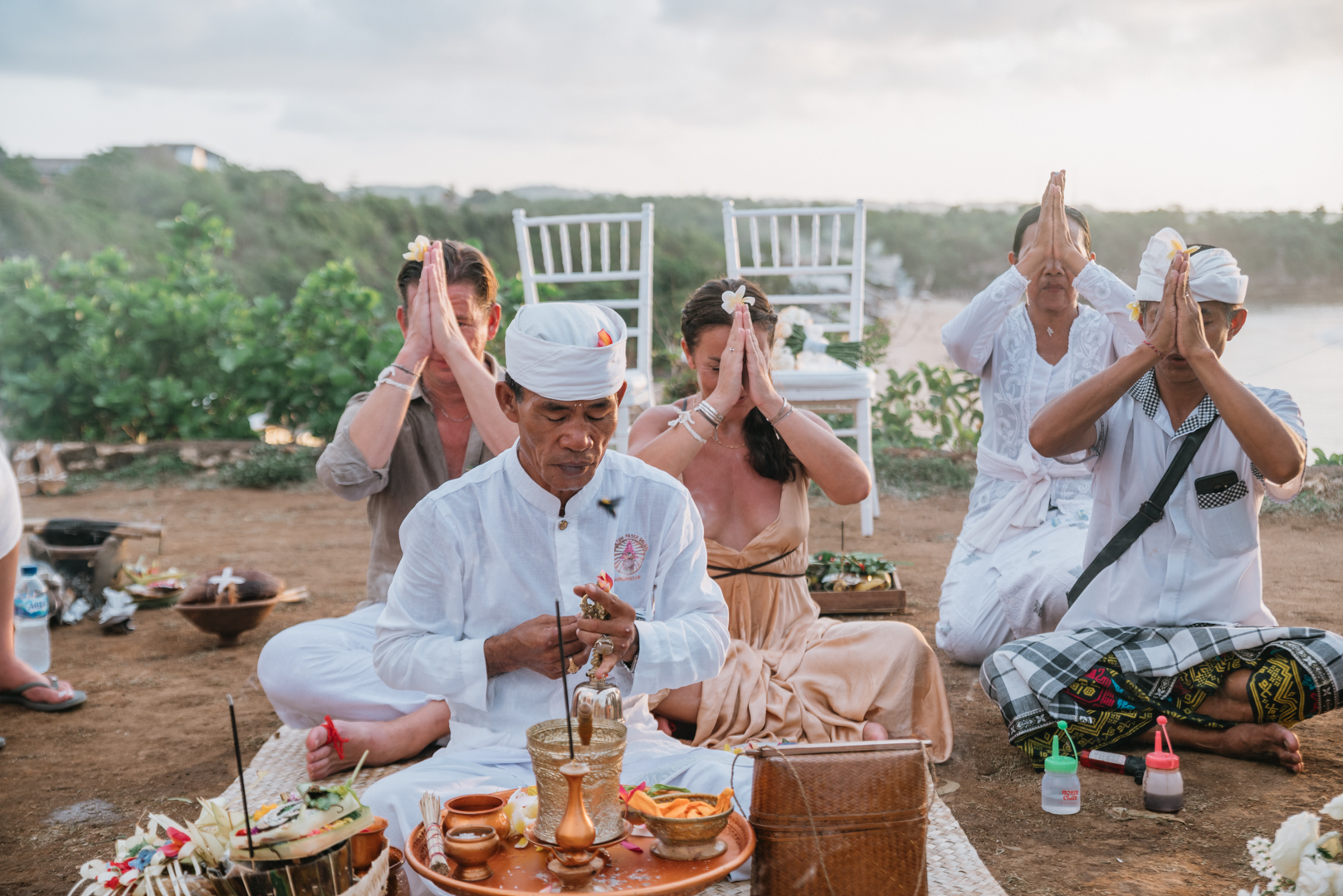
Sitting cross-legged in front of the couple, the pemangku prepares the holy water, the tirta, with frangipani flowers. He then chants the mantras while ringing the genta, the sacred bell whose sound carries the prayer.
Meanwhile, the priestess moves among the offerings with incense in hand, purifying the space and everyone in it.
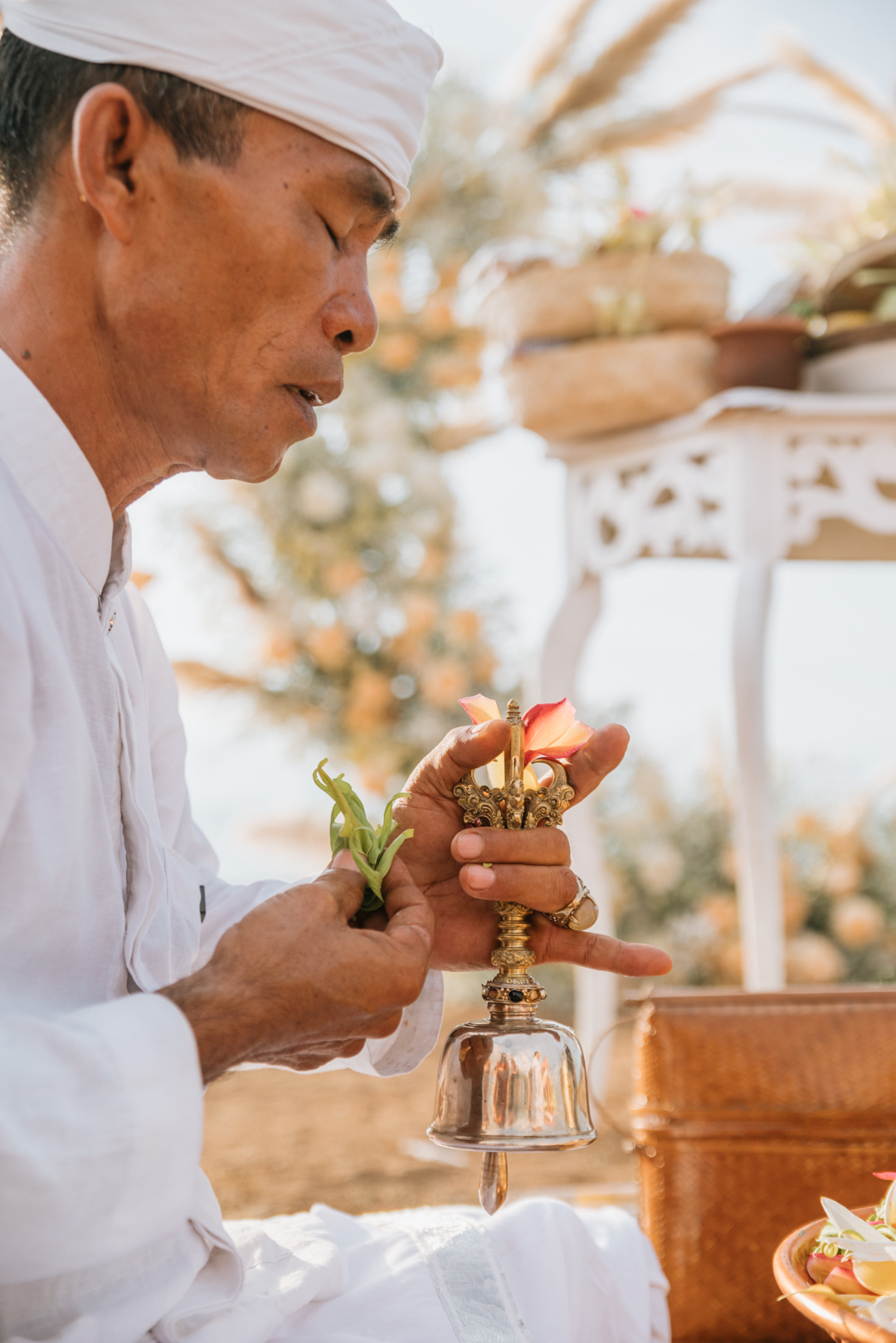
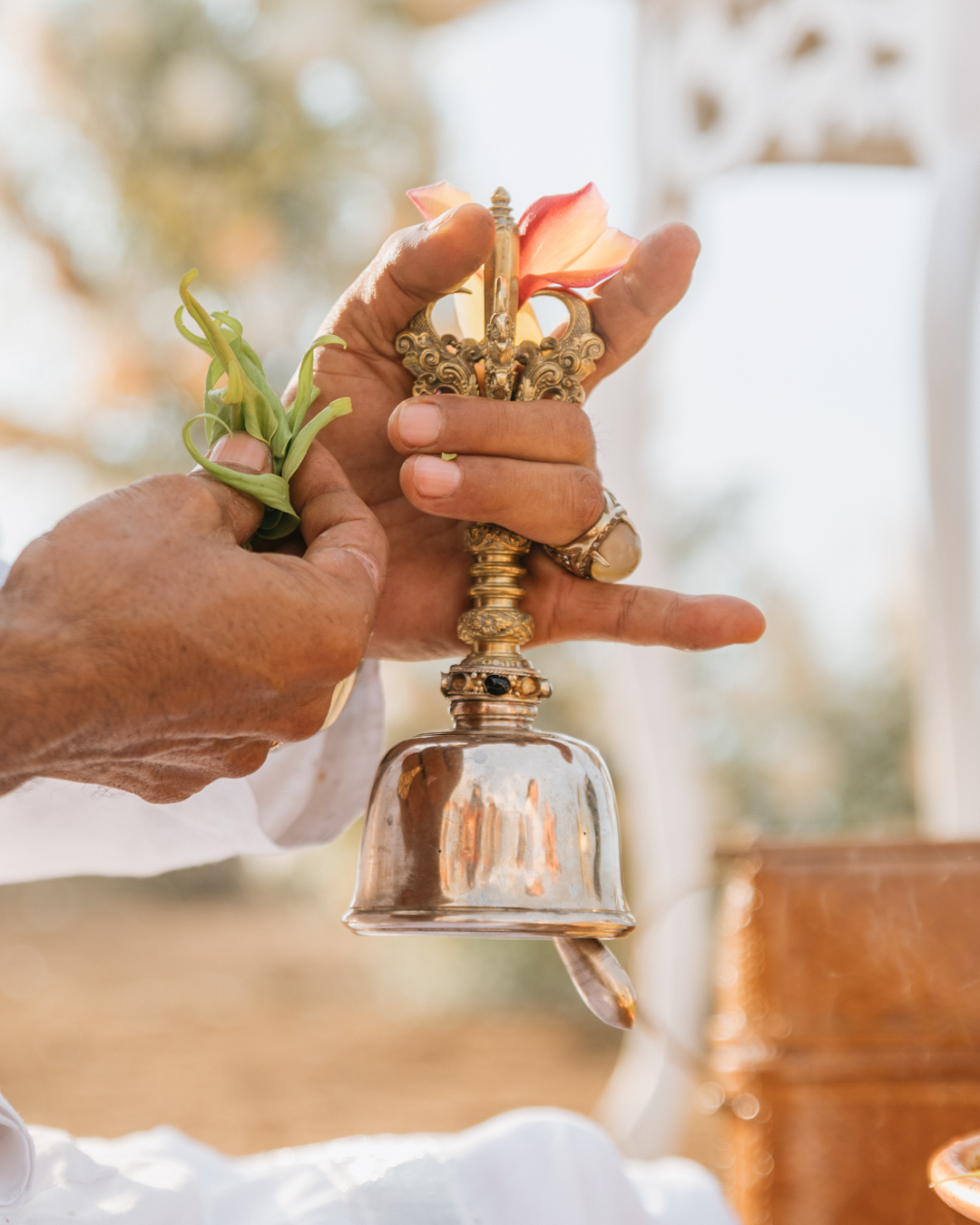
The genta, the pemangku’s sacred bell
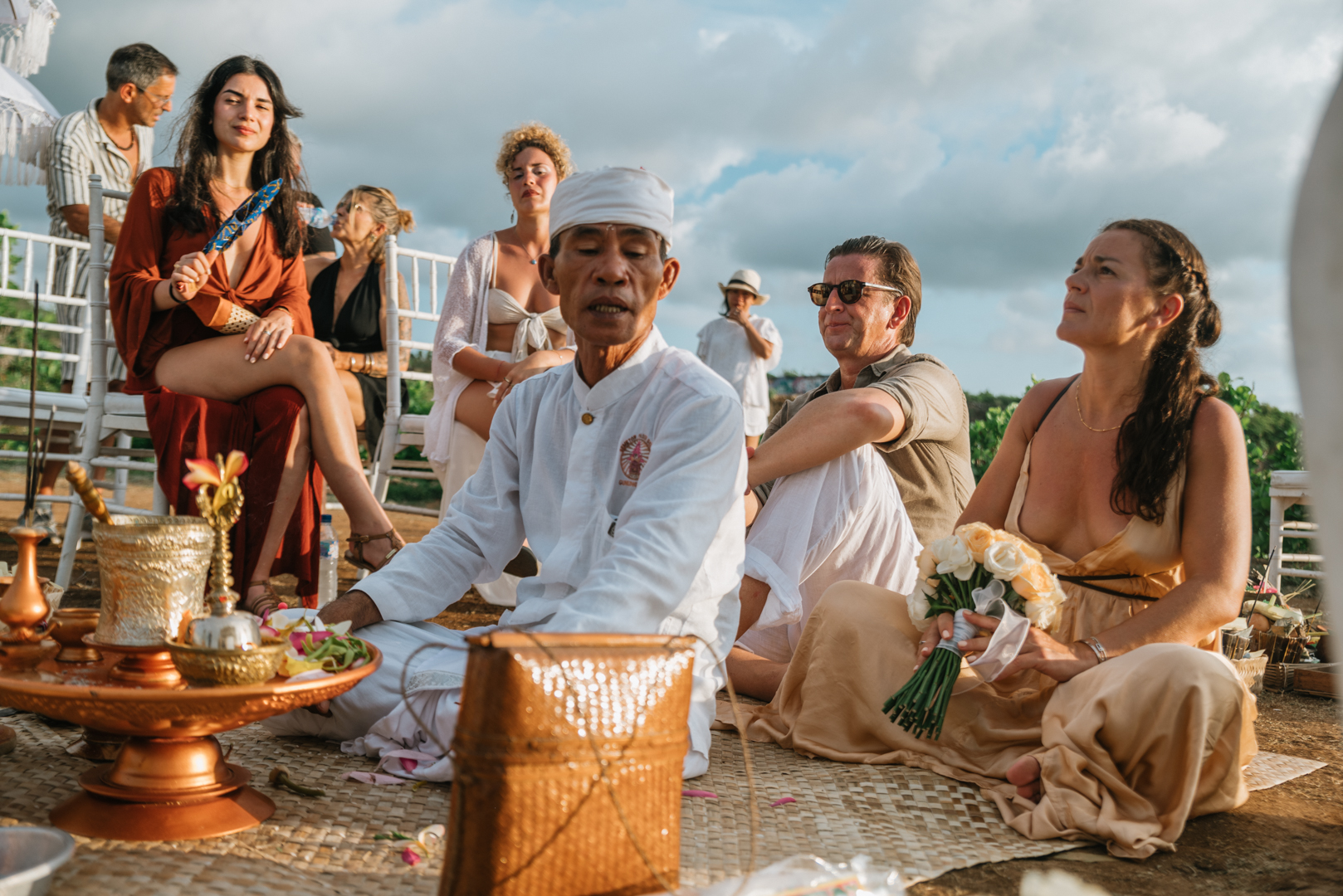
J and G facing the priest
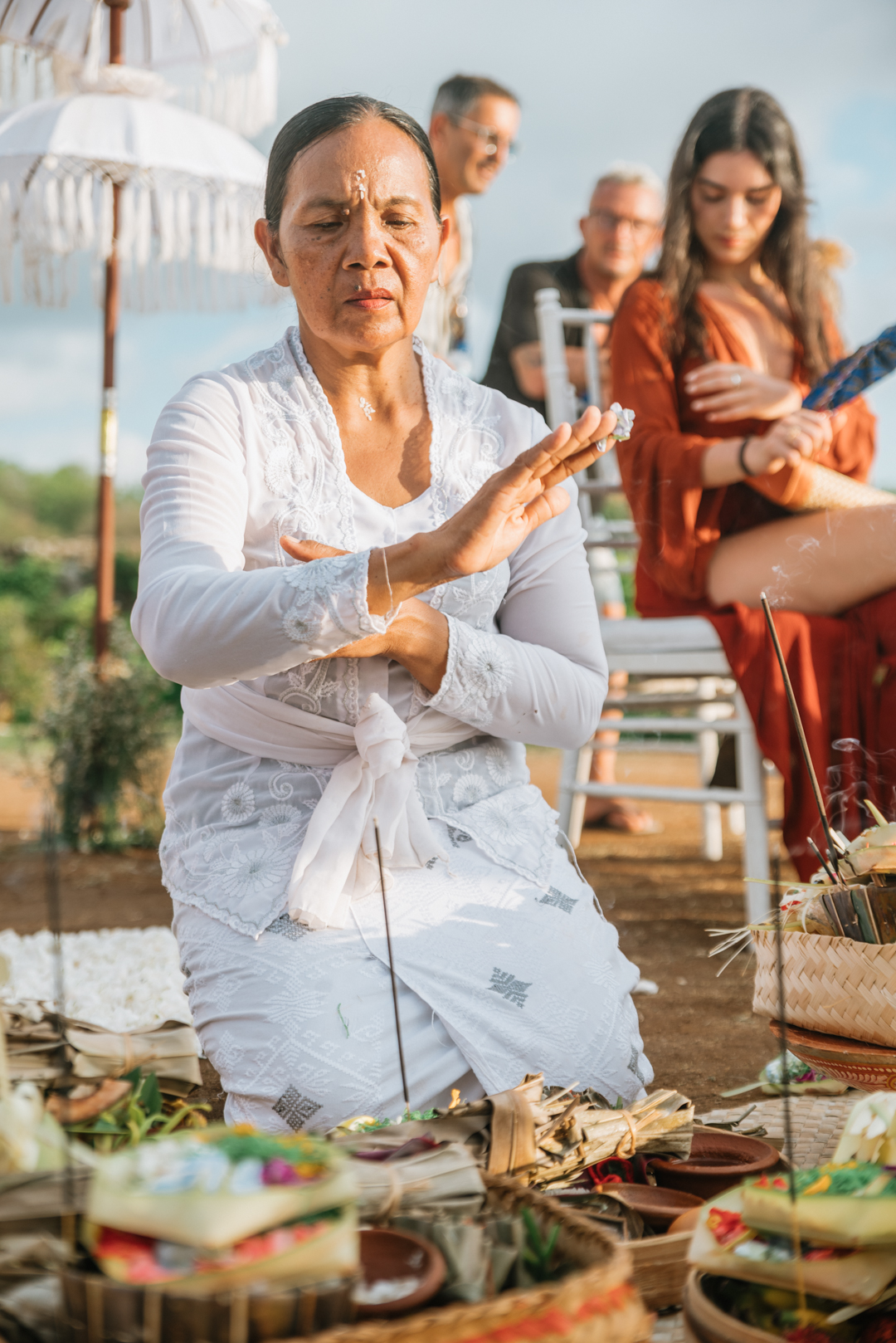
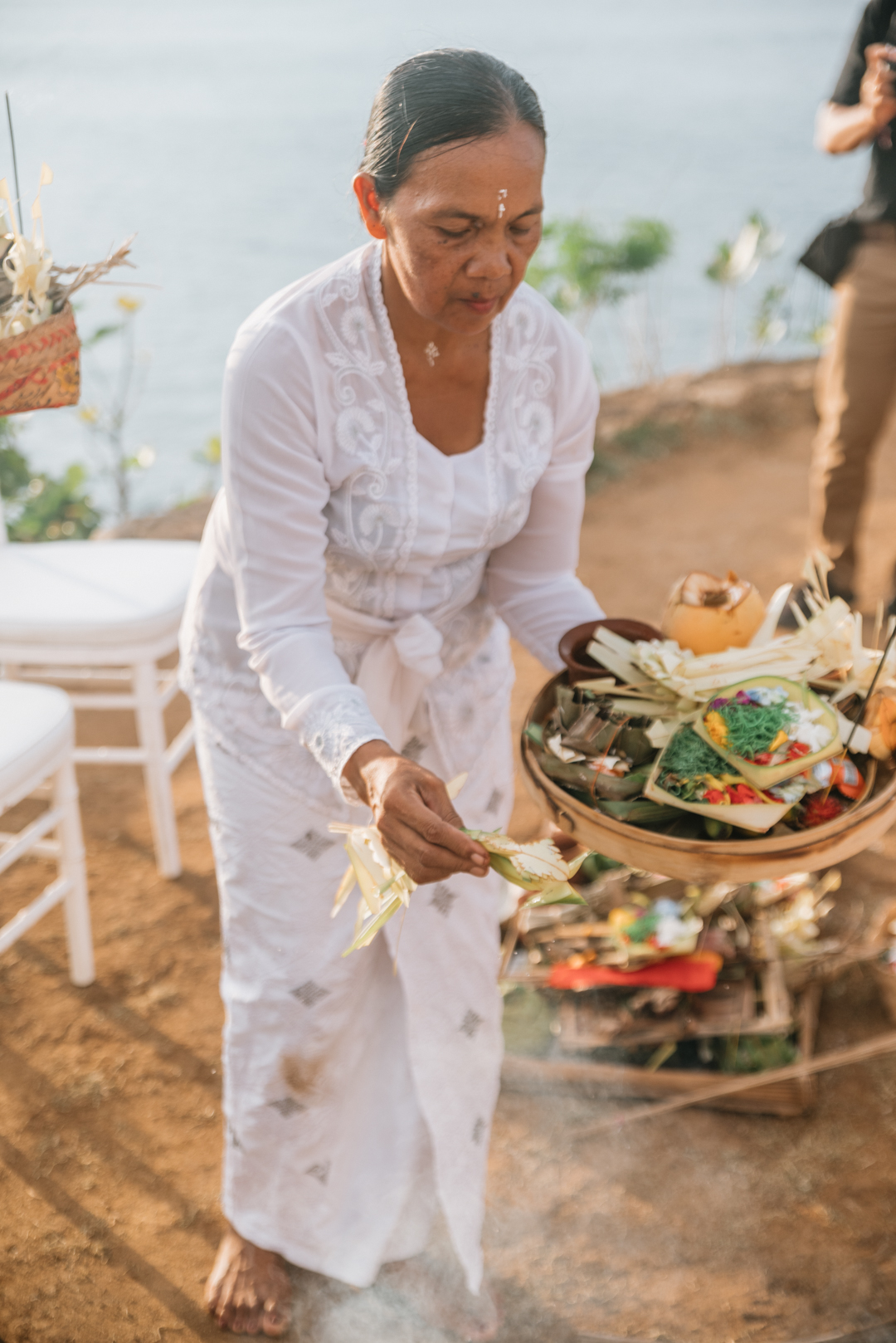
Blessing the couple
Then comes the heart of the ceremony. The priestess sprinkles J and G with holy water using a small bundle of leaves, then pours some into their cupped hands: they drink it, then pass it over their face and hair, three times, as tradition requires.
A cotton thread is then tied around the wrists of the couple and their loved ones. It is worn until it falls off on its own, as a sign of protection.
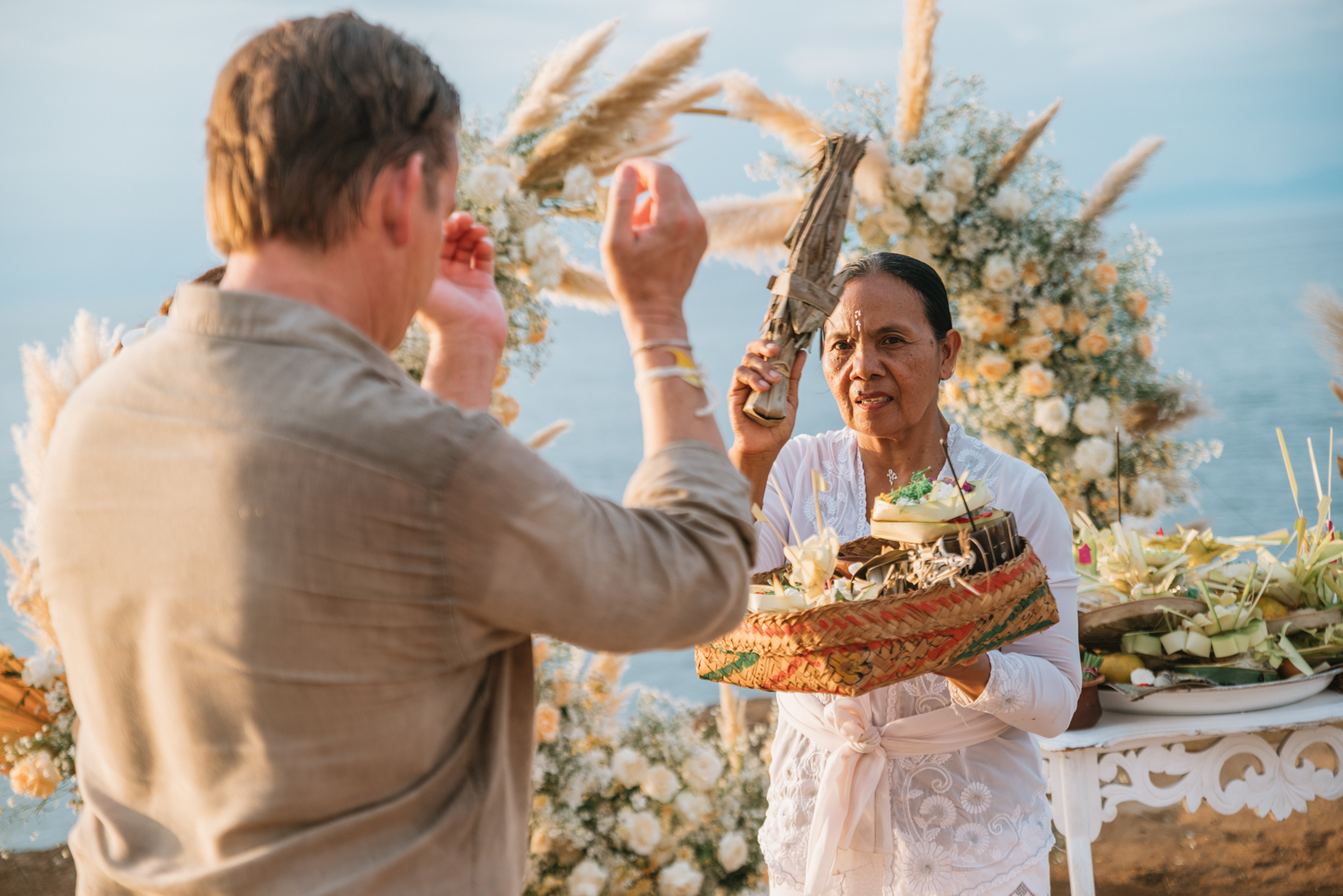
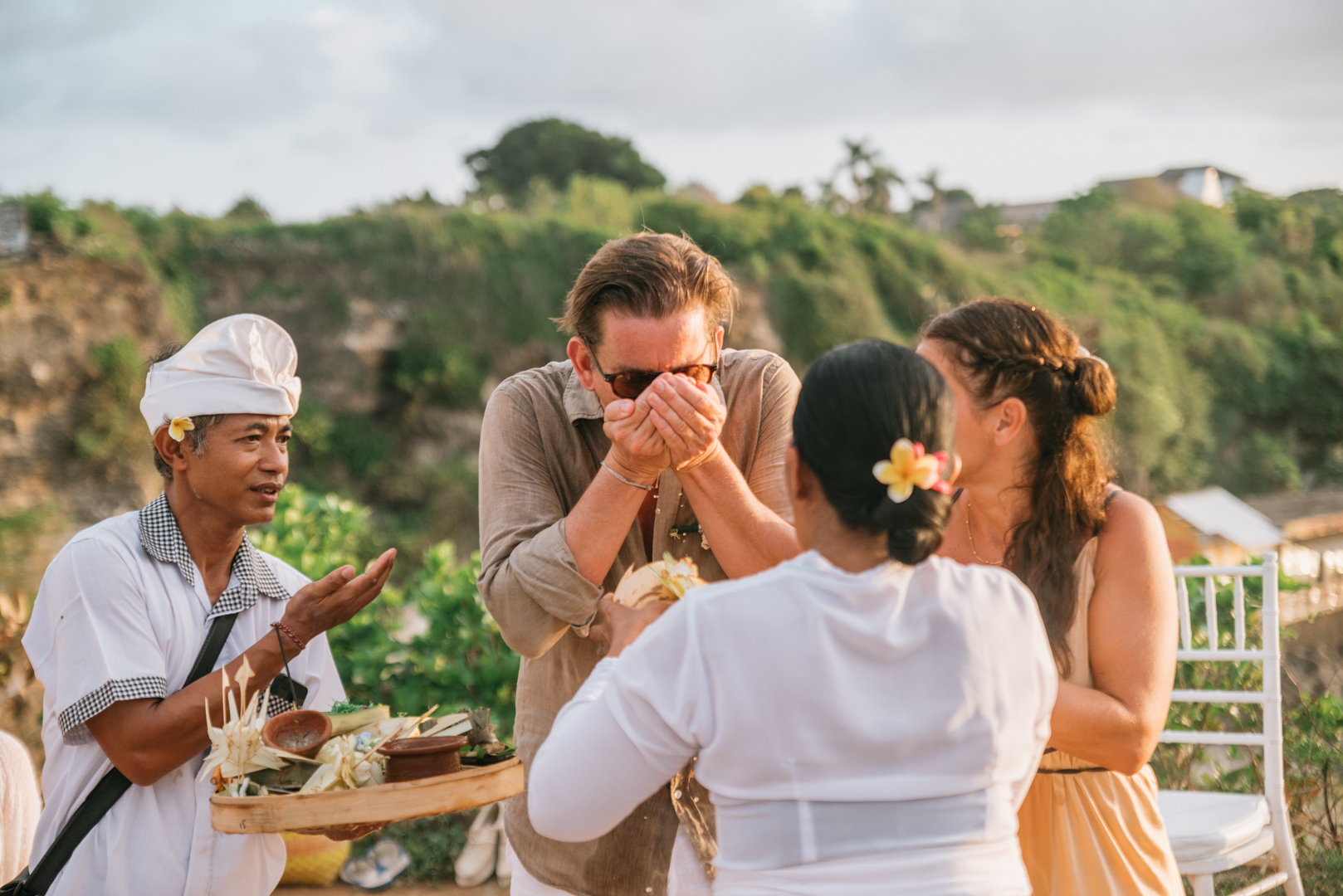
Holy water, sprinkled and then drunk from cupped hands
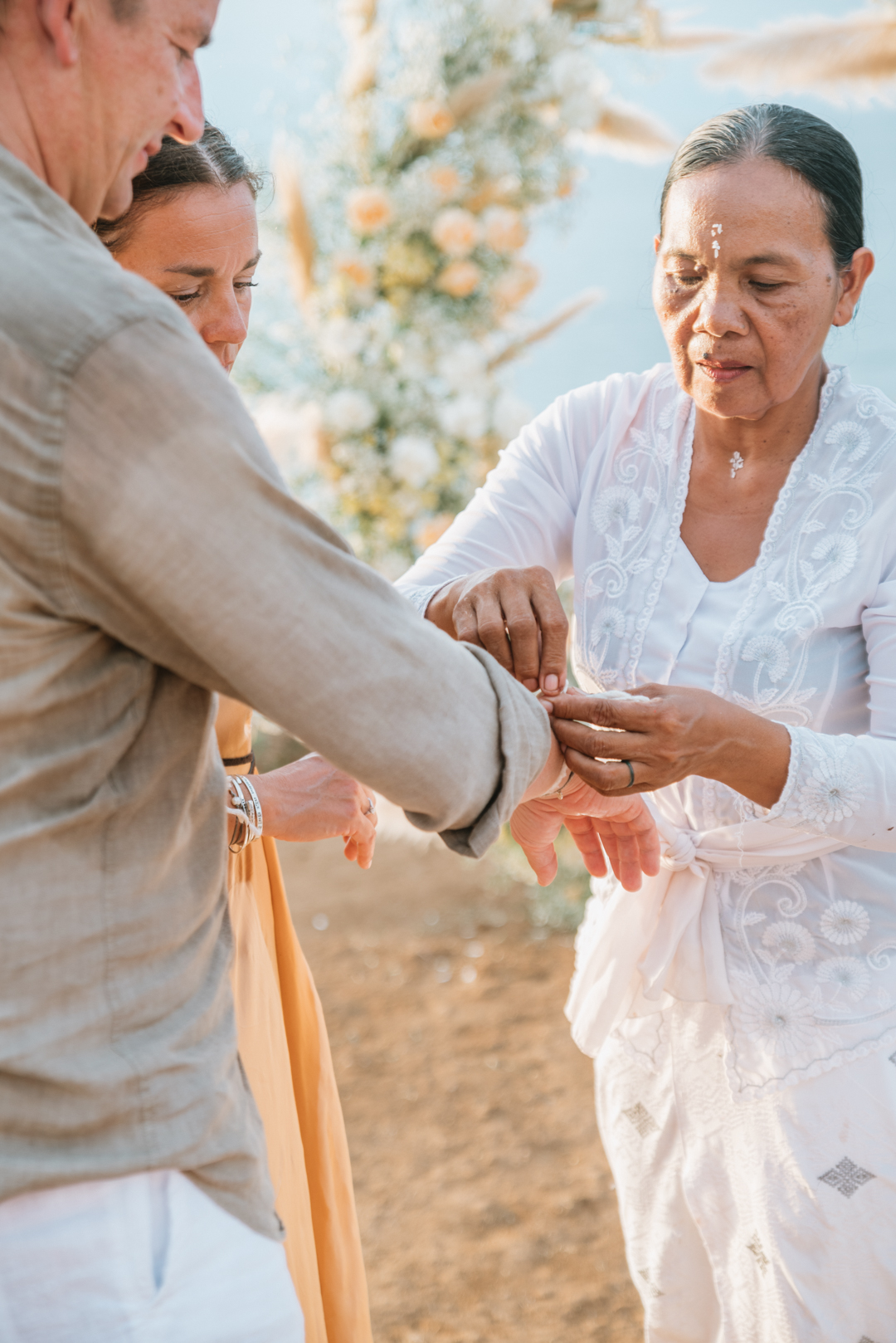
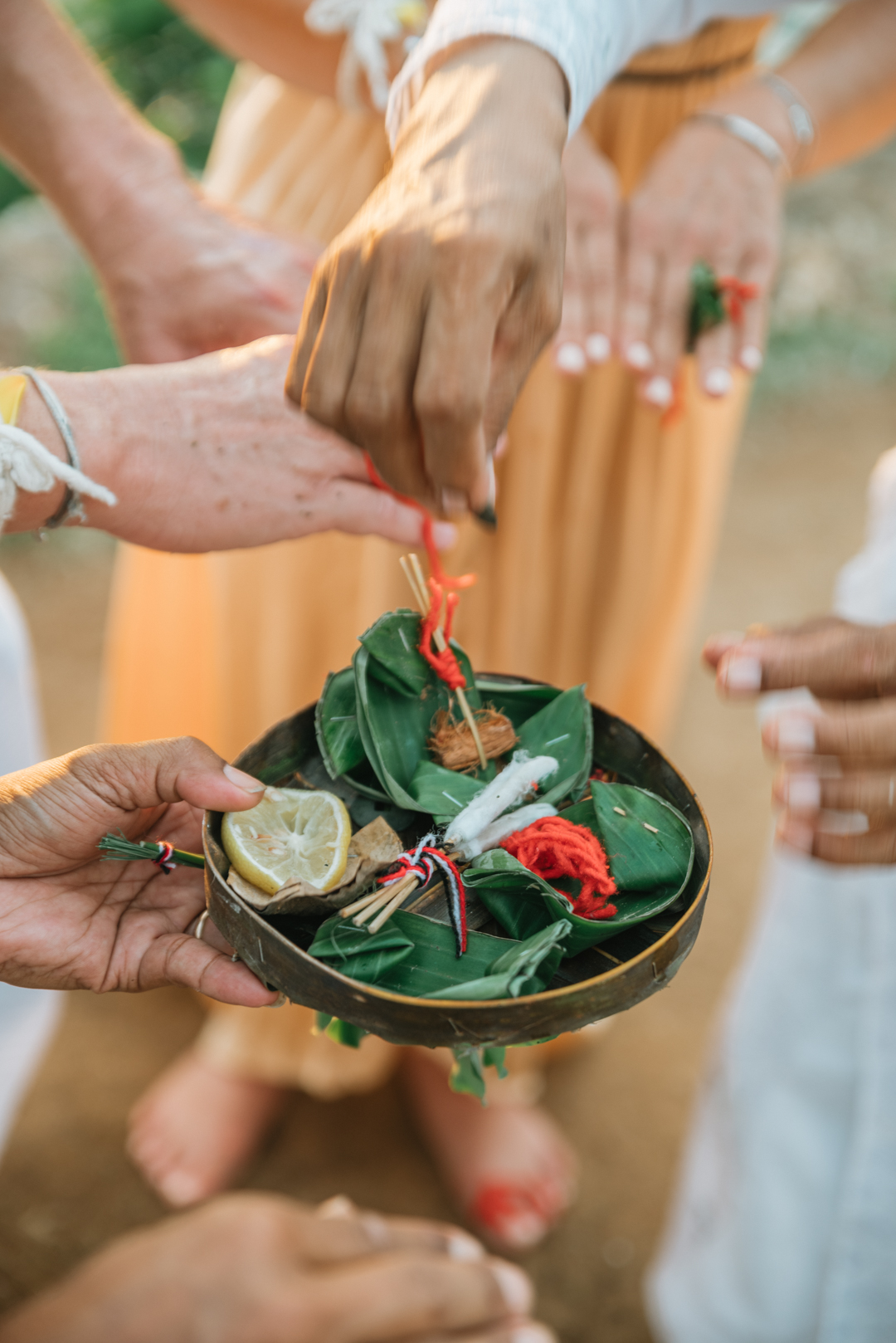
The sacred thread tied around the wrist
A shared prayer
All the guests are invited to pray with the couple, the Balinese way: hands joined above the forehead, a flower between the fingertips, which is then tucked into the hair or behind the ear. There is no need to be Hindu to take part: the priest guides every gesture.
Fire and sunset
To close the ritual, a coconut marked with a white cross, the tapak dara, a symbol of balance, is burned near the altar: the fire completes the purification. As the sun sets over Balangan bay, J and G receive a final blessing in the golden light.
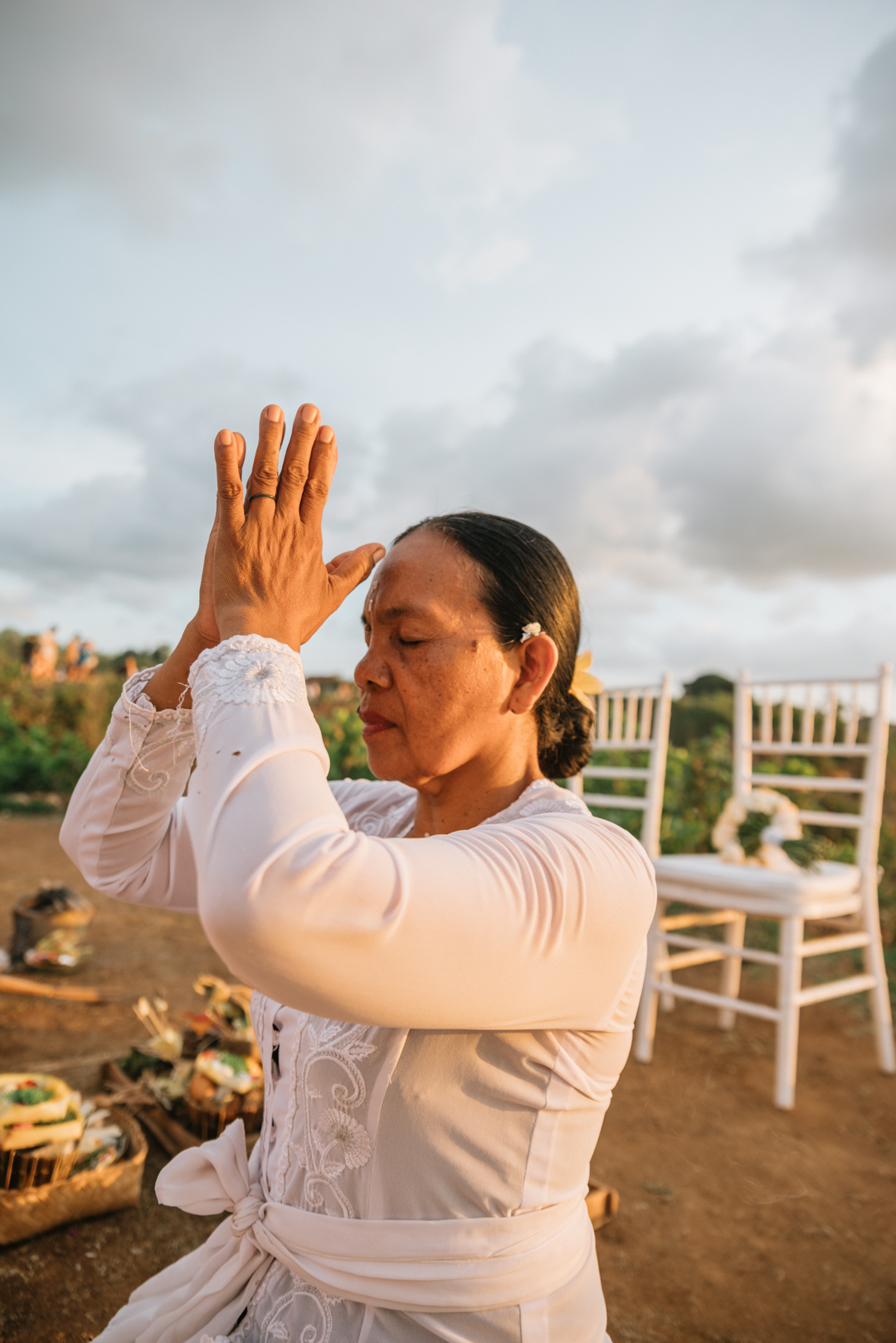
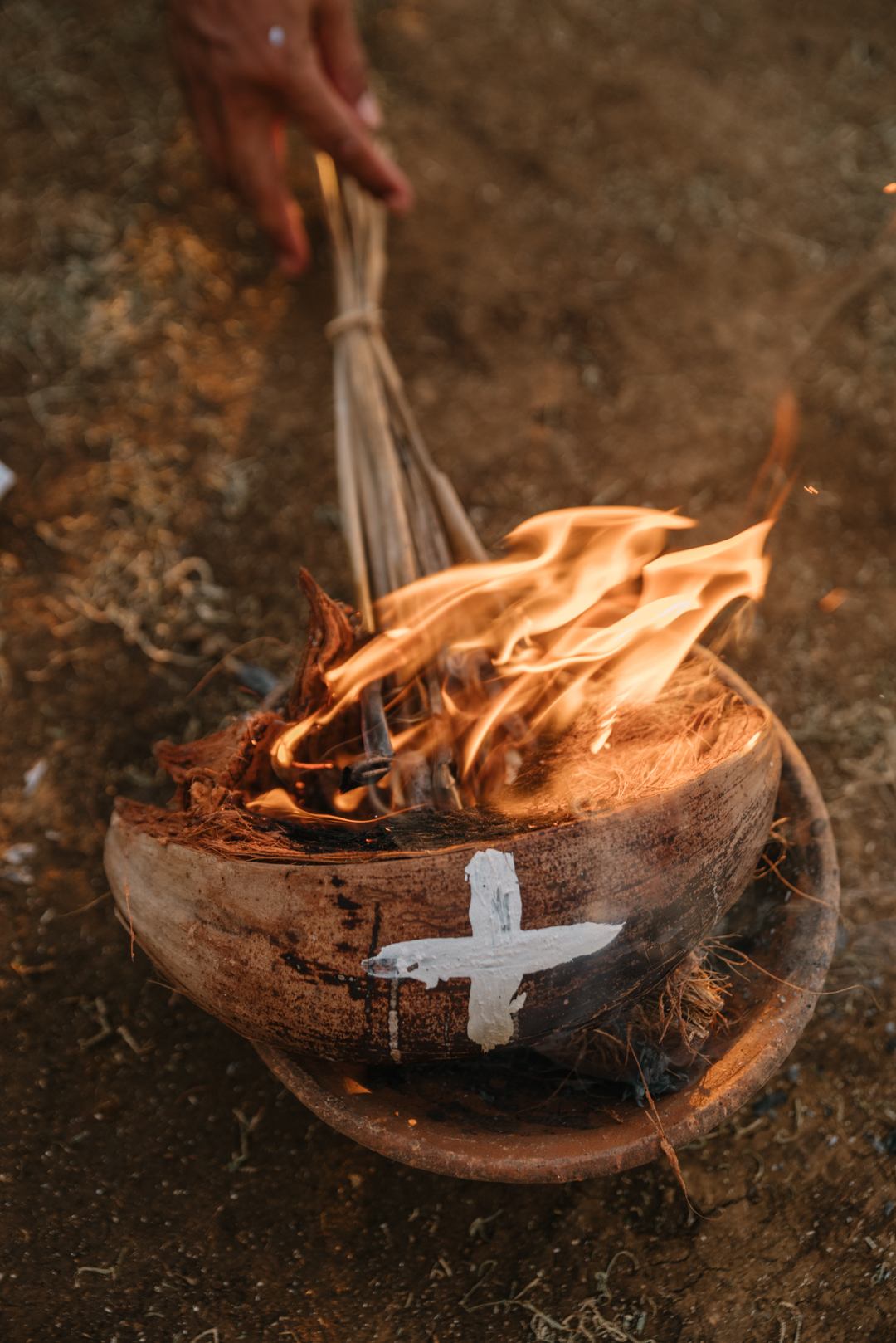
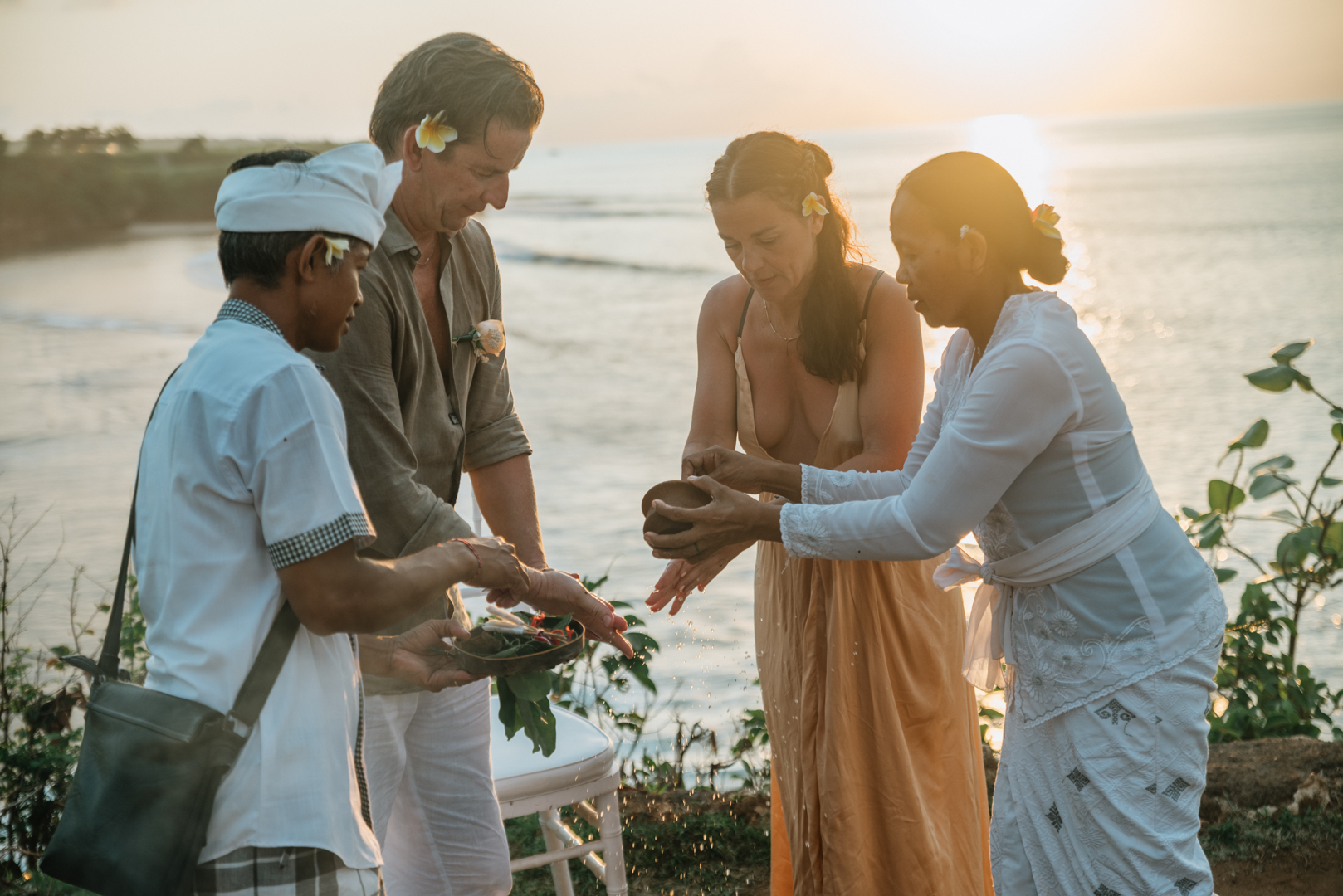
A final blessing at sunset
Planning a Balinese blessing in Bali
Since 2011, we have organised Balinese blessings for couples on their own as well as for weddings of 200 guests. Here is what you need to know:
- Priest and offerings: real pemangku we have worked with for years, and real offerings prepared according to Balinese tradition, never a staged ceremony.
- Venue: cliff, beach, villa garden or rice field: the ceremony adapts to the place you choose.
- What to wear: white is customary, with a sarong and sash (selendang) to respect tradition; we are happy to advise you.
- Duration: allow about an hour. The blessing can be combined with a symbolic ceremony, a vow renewal or a dinner.
- Timing: late afternoon, so you finish at sunset, just like J and G.